Molly Marshall (written in 1994)
(see other posts about 870 – Photos are from Grantanbrycg)
One thousand one hundred and twenty four years ago (now 1,156 years!) this summer season, Horningsea underwent one of the most frightening episodes in its long history. We owe so much to the contemporary chroniclers who gave details, if sometimes annoyingly vague, of past events – by which we can catch a glimpse of life as it was, in those distant times. In this case we owe our historical knowledge of this village and this church to the Ely chronicle, known as the Liber Eliensis – the Book of Ely. From this book we learn that in Horningsea in the 9th century there was a monastery under Royal Patronage, with a sizeable community of Monks. “Not a small community of clergy” is the exact translation from the Ely Chronicle. How many? 15 -20? Perhaps more? But the text goes on to tell us that ” the name of the priest-in-charge was Cenwold”. The Minster – a church both of a monastery and a parish stood on _this spot, surrounded by the numerous monastic buildings. The actual village settlements was near where nowadays Eye Hall stands. All traffic came by river – the Dock was the arrival point for all visitors.
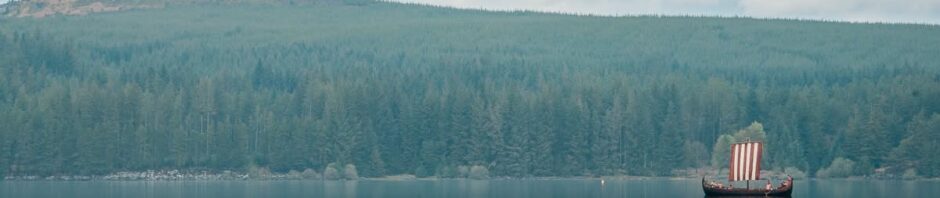
At this time Danish warriors frequently crossed the North Sea in their Longboats during the summer months, looting, burning and spreading terror and devastation, down all the eastern side of Britain. The City of York fell to the Viking invaders in 867.
According to the Ely Chronicle in the year 870 it was to our area of East Anglia that they came sailing over the sea and rowing up the river. Any settlement on a riverside site must have known of this ever-recurring danger – as indeed Cenwold and his fellow clergy must have realised – perhaps they hid some of the church’s best silver and gold “ornamenta”, the collective name for Church plate.
Anyhow – perhaps it came to pass in the following manner:
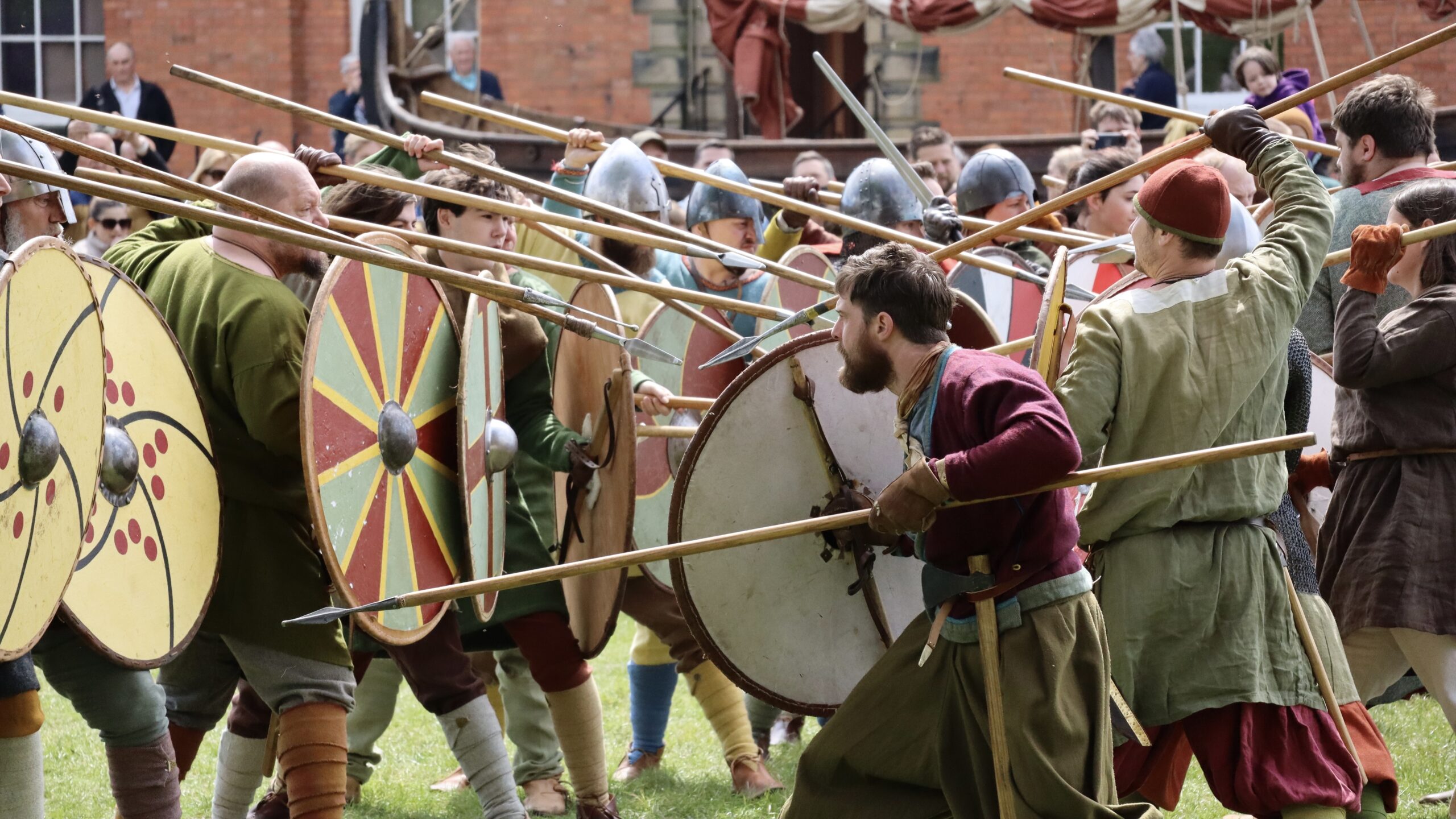
One warm, dark summer night in that year 870 disastrous for so many religious establishments throughout Anglo-Saxon Britain. The first noticeable sound would have been the splash of so many oars approaching the Dock – then the Longboats drew in towards the landing stage – landing planks pushed out from the decks, to enable the crews of perhaps 50 – 70 warriors to creep ashore, battle axes, swords and short throwing lances were handed out from the arm’s chest.
At a sign of command from their chieftain, they advanced in silence up the slope towards the monastic buildings and the church – lighted torches were then handed out – and then the leader, yelling blood chilling Norse battle cries, burst into the dim cool church. Shouts and blows and clashing of axes and swords rang out, as the looters hacked open chests, tore down altar-hangings and richly gilded lamps – herding all their booty onto the rush strewn floor ready to bear off to their Longboats.
Once they reached these boats there were their big cauldrons ready to cook feasts of stolen ox or sheep – big leather bags to fill with gold and silver objects – and big casks of ale to complete requirements for a festive triumphant barbecue. They might even have danced their famous Norse sword dance – with a singer chanting verses to celebrate victory!
This however you must realise is just a possible incident – what the chronicle does tell us is that “some of the pagans did then accept Christianity and were baptised”!
Again no information as to how many of them and when this commendable conversion came to pass! Did Cenwold the priest instruct and baptise these Danish Vikings in the old church once standing on this spot, or what was left of it after the visitors of 870?
All the chronicle goes on to tell us is that these Danes _gave _the monastery of Horningsea 7 hydes of land, two of these hydes were for the village of Eye. The Hyde was in size 240 acres, so the community’s share of 5 hydes was a gift of 1200 acres! Gratitude to God and the monks for their conversion? Or a deep feeling of guilt?
Whatever their intention at that time, in the end those hydes caused so much strife and trouble, involving the monks and villagers, Abbots, Bishops, even the military – indirectly probably causing the final extinction 100 years later of the Monastery of St Peter Horningsea – leaving for the future just a beautiful parish church!